
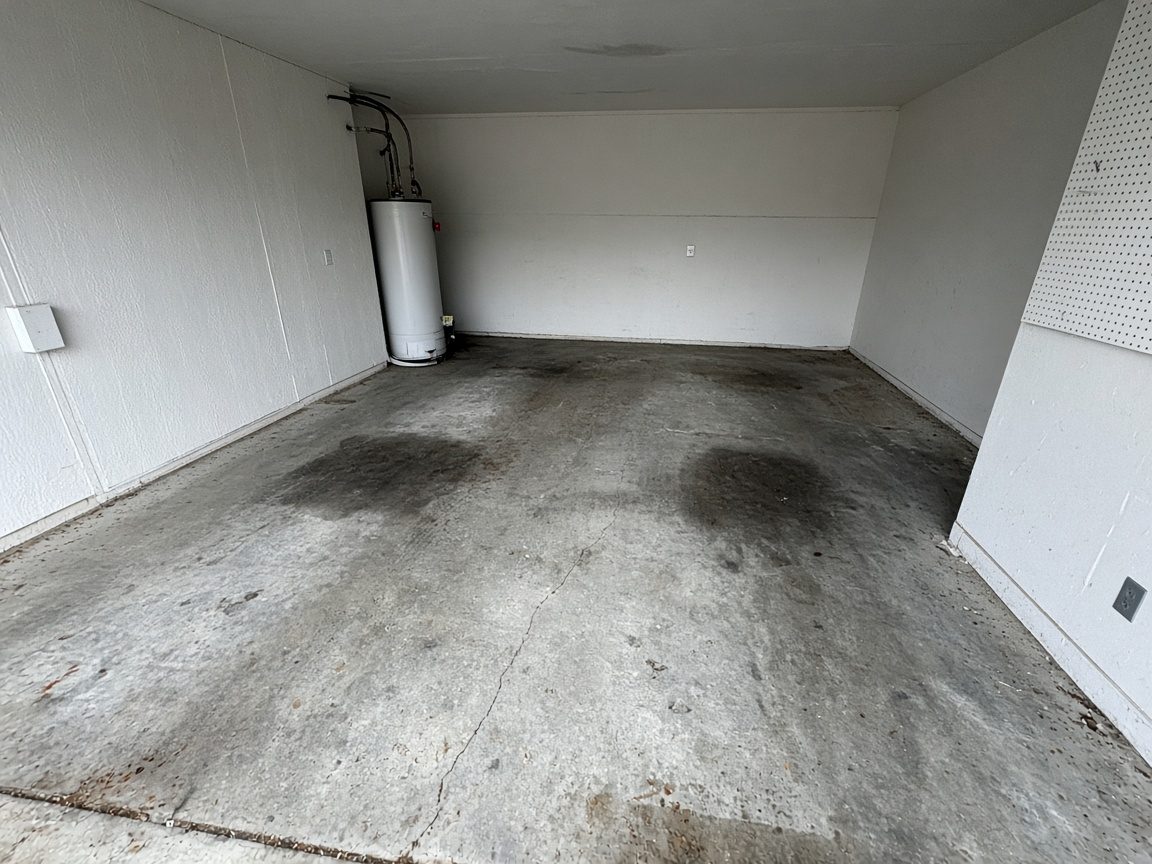
Before
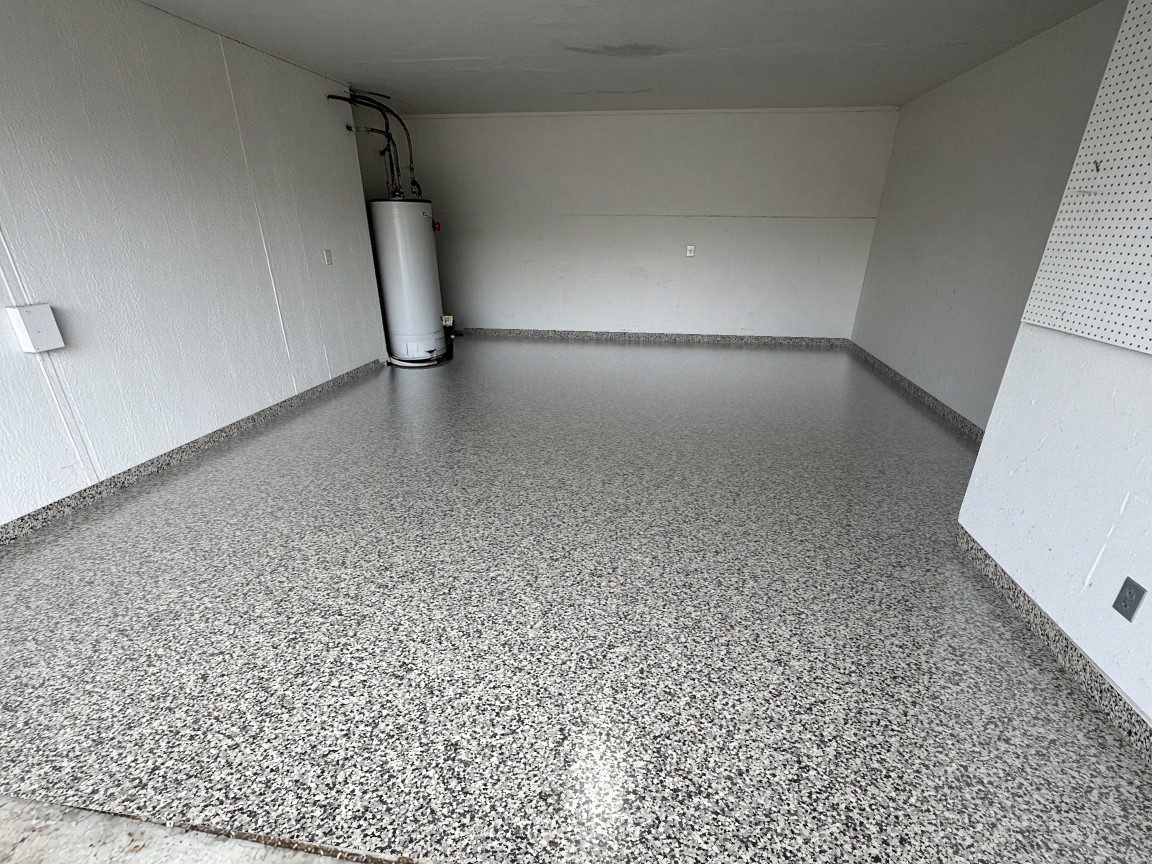
After
Your garage is probably the biggest room in your house, and it’s the one with the worst floor. Oil drips, tire marks, rust rings from the old fridge, hairline cracks, and that fine concrete dust that never seems to go away. A full-broadcast flake coating turns it into a clean, finished floor you can wipe up in a minute.
This page covers garage floors, the core of our epoxy floor division. We’re Jax Exterior Cleaning & Paver Sealing, licensed and insured since 2019.
What You Get
- A full-broadcast flake floor, wall to wall, in the color blend you choose
- Diamond-ground concrete, not acid etched, for a real bond
- Cracks and pitting repaired before coating
- A clear, UV-stable polyaspartic topcoat that won’t yellow
- A floor that shrugs off oil, gas, brake fluid and road grime
- Stem walls (the short concrete curb along the garage walls) can be coated too
The Problem With Most Garage Floor Jobs
We hear the same story a lot. Somebody rolled on a kit from the hardware store or hired the cheapest quote, and within a year or two it’s peeling in two strips right where the tires park. That’s hot tire pickup. A tire heats up on the drive home, sits on the coating, and as it cools it grips the coating harder than the coating grips the concrete.
That isn’t bad luck. It’s a prep problem. A coating rolled onto smooth, dirty or sealed concrete has nothing to hold on to. That’s why every floor we do starts with a diamond grinder.
How We Do It: Our Flake Floor Process
Here’s exactly what happens, from the first phone call to the day you park on your new floor. Every floor gets every step. We don’t skip any of them to hit a lower price.
- Free estimate and moisture test. We come out, measure the floor, look at every crack and stain, and check the slab for moisture coming up from underneath. If a reading comes back high, we’ll tell you before we quote and talk through the options. You’ll see flake samples in your own garage light and get a written quote. If something about your slab changes the job, we tell you then, not on install day.
- Protect and prep. The floor needs to be empty so we can coat it wall to wall. Please clear the floor before we arrive. If that’s a problem, let us know at the estimate and we’ll talk it through. We tape off and cover the bottom of the walls, the door frames and anything that stays in the garage. Items that can’t be moved, like a water heater, are usually coated around, and we’ll plan for them at the estimate. Our mixing station sets up outside on plastic, so nothing ends up on your driveway.
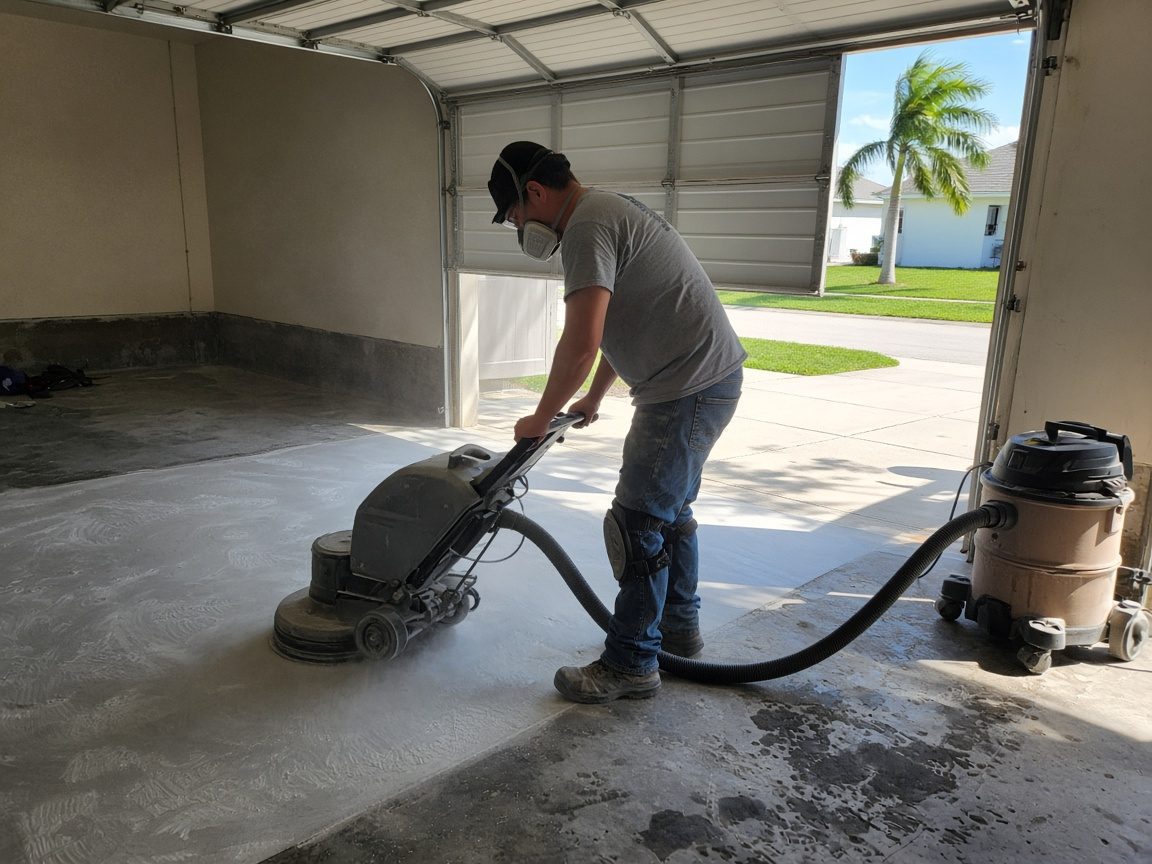
- Diamond grinding with dust control. We grind the entire slab with diamond tooling, and we hit the edges and corners with a hand edge grinder. Our grinders run hooked to a HEPA dust vacuum, so the concrete dust gets captured instead of drifting into your house. Grinding opens up the concrete and gives the coating something to bite into. We never acid etch.
- Crack, spall and joint repair. Cracks get opened up, filled and ground flush. Chipped and spalled spots get patched. Typical crack repair is assessed and priced at your quote, so there are no surprises. Then we vacuum the whole floor again, so the base coat goes onto clean, bare concrete.
- Base coat. We mix the polyaspartic base coat in small batches and roll it out one section at a time. Small batches mean every bit of coating goes down fresh, while it can still bond the way it’s supposed to.
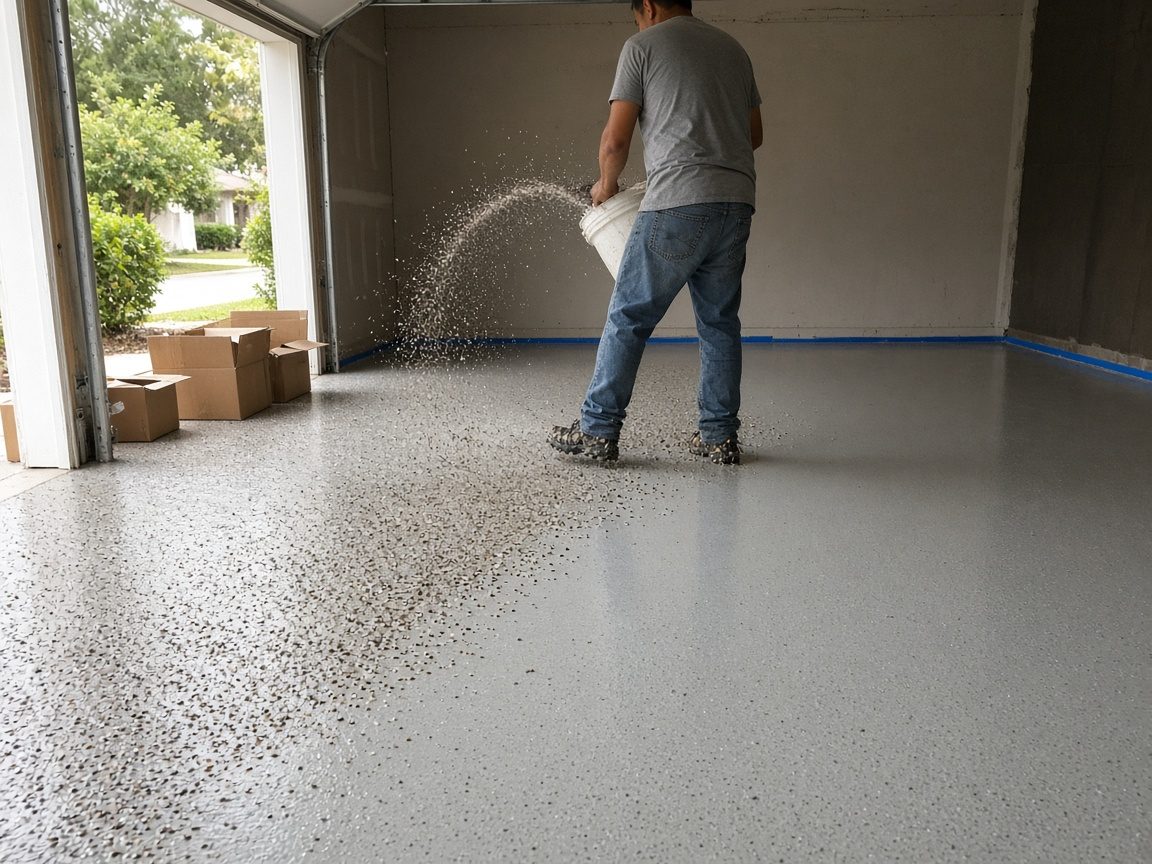
- Full flake broadcast. While the base coat is still wet, we throw vinyl flake up into the air so it rains down evenly, and we keep going until the floor won’t take any more. That’s what “full broadcast” means: no base coat showing anywhere, just flake from wall to wall. If you’re having the stem walls done, they get the same base coat and flake in this step.
- Scrape and vacuum the excess flake. Once the base coat sets up, we scrape the whole floor with a steel blade to knock off loose and standing flake, then vacuum it all up. This step keeps sharp chips from poking up through the finish, so the floor feels right under bare feet.
- Clear polyaspartic topcoat. We spread a clear, UV-stable polyaspartic topcoat over the flake and back-roll it for an even finish. This is the layer that takes the hot tires, the oil drips and the sun coming through an open garage door. The standard finish is a gloss topcoat, and an anti-slip additive can be mixed in for extra traction.
- Cure and final walk-through. Before we leave, we walk the floor with you and go over how to care for it. You can walk on it within a few hours in most cases and park on it after about 24 to 48 hours. The coating keeps hardening for several days, so hold off on rolling tool chests and heavy equipment until then. Heat and humidity change cure times, so we’ll give you the exact times for your floor that day.
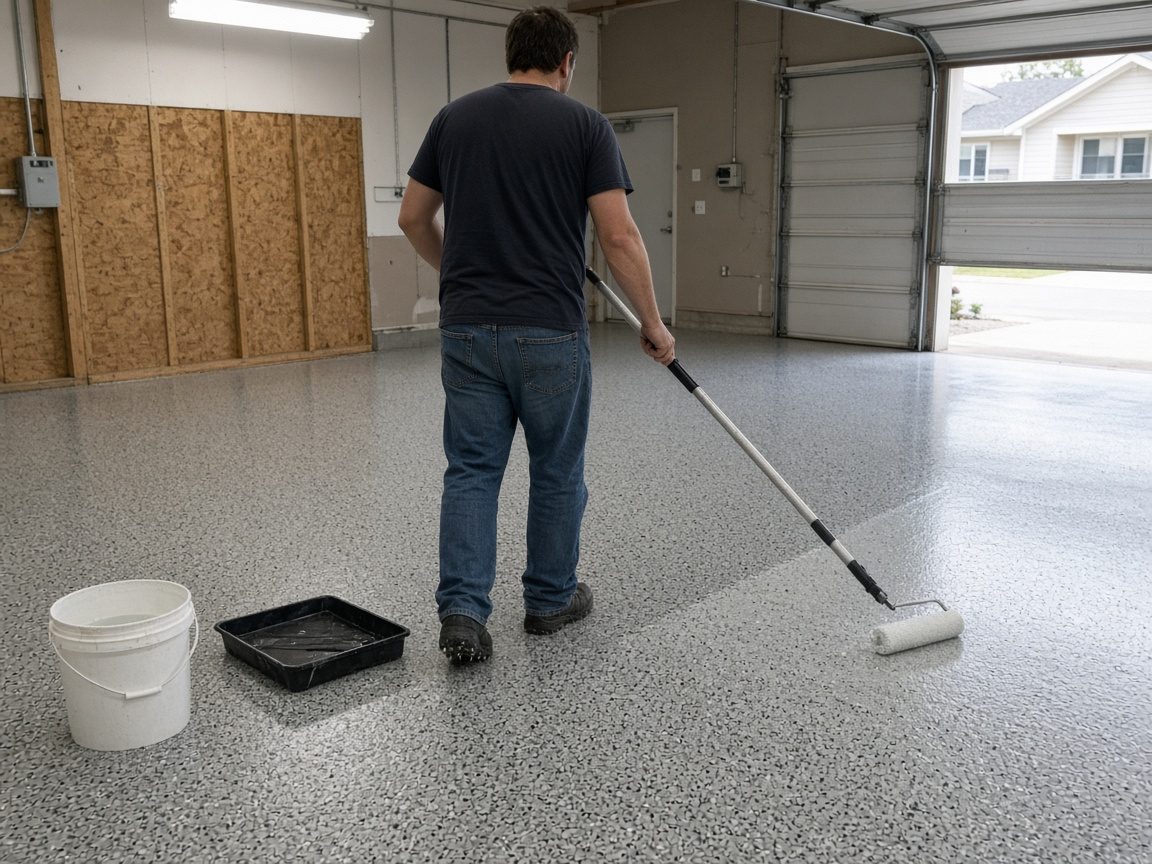
Most two-car garages are done in about one day. Want the longer version, including how to get your garage ready before we show up? Read our flake floor process.
Why Full Broadcast Flake
Some companies do a “light” or partial flake, where you can see the solid base color between the chips. We do a full broadcast. The floor gets covered until it won’t hold any more flake. That gives you:
- More thickness and toughness across the whole floor
- Better hiding of small cracks, patches and slab imperfections
- A little texture underfoot, so it isn’t as slick as a smooth painted floor
- A floor that hides dust and dirt between cleanings
Built for Jacksonville Garages
Florida garages have their own set of problems:
- Heat. Summer garage temperatures and hot tires are hard on soft coatings. Our polyaspartic topcoat is hard and holds up.
- Sun. With the garage door open, plain epoxy can yellow. Polyaspartic is UV stable.
- Moisture. Slabs on sandy ground with a high water table can push moisture up from below. We check before we quote, if moisture is a concern we’ll explain the options, such as a moisture-mitigating primer, before you commit.
- Salt air. Near the beaches, salt and sand get tracked in on every tire. A sealed, non-porous floor rinses clean.
Want the details on the materials? Read our polyaspartic vs. epoxy breakdown.
What About Old Coatings or Paint?
If your floor has old paint or a peeling DIY epoxy, it has to come off before anything new goes down. Grinding removes most coatings. Heavier or thicker coatings take more time and may add to the price. We’ll check for old coatings at the estimate and include any removal in your quote.
Caring for Your New Floor
Sweep or use a dust mop regularly, and mop with warm water and a mild cleaner when it needs it. Wipe up oil and chemicals when you notice them. Put a mat or plywood under kickstands and jack stands, and avoid dragging heavy steel items across the floor. That’s about it. If your driveway is looking rough next to the new floor, we also do concrete cleaning.
Frequently Asked Questions
How long does a garage floor coating take?
Most two-car garages are done in about one day. You can walk on the floor within a few hours in most cases and drive on it after about 24 to 48 hours.
Do I need to empty the garage?
Yes, the floor needs to be clear so we can grind and coat it wall to wall. Please clear the floor before we arrive. If that’s a problem, let us know at the estimate and we’ll talk it through.
What about my water heater, freezer or shelving?
Let us know about them at the estimate. Items that can’t be moved, like a water heater, are usually coated around carefully, and we’ll talk through the plan with you before install day.
Can you fix the cracks in my garage floor?
Yes. We fill and grind cracks and pitting before coating. The flake hides most repairs well, but a crack that is moving because the slab is moving can come back through any coating.
Will oil and gas stain the floor?
The polyaspartic topcoat resists oil, gas, brake fluid and most household chemicals. Wipe spills up when you see them and the floor cleans right up.
Is there a warranty?
Yes. Every floor is backed by a written warranty, and we go over the details with you at your quote.
Get a Free Garage Floor Estimate
Call 904-444-9190 (Monday to Friday, 8:30 AM to 5 PM) or fill out our free estimate form. We’ll measure the garage, check the slab and bring flake samples. Curious about price first? See our garage floor coating cost guide. Covered patio or lanai too? See patio, lanai & pool deck coatings.
Licensed and insured, in business since 2019, with nearly 200 Google reviews.